Across regional Australia, former industrial structures are being reimagined as places for people. Grain silos, once purely functional, are now landmarks that invite visitors to stop, explore and engage with their surroundings. The Rainbow Silo Tourism Development is one such project, transforming the 100-year-old Llew Schilling Silo into a public destination that allows visitors to experience both artwork and landscape from elevated viewpoints.
Moddex was engaged by Onley’s Holdings Pty Ltd to supply handrail and balustrade for the Rainbow Silo tower installation in regional Victoria. The development included a multi-storey tower with lift and stair access, connecting visitors to viewing platforms within and alongside the silo. These elevated spaces allow the public to safely experience internal artworks as well as panoramic views across the surrounding Mallee Plains.
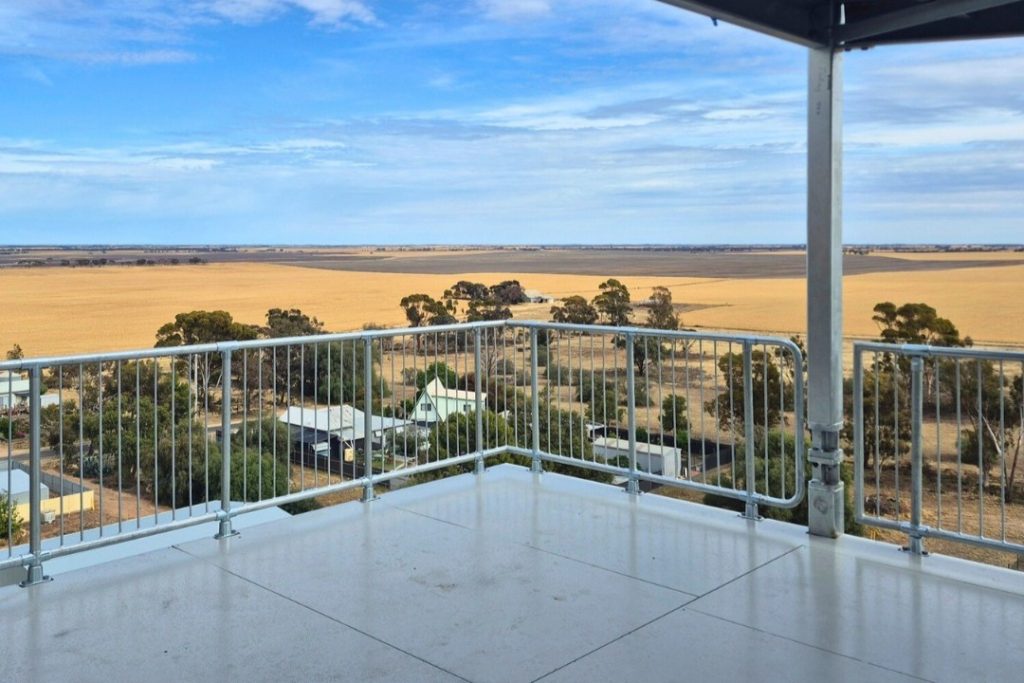
Moddex’s pre-engineered handrail and balustrade play a key role in guiding safe movement throughout the structure. With high visitor numbers expected and the site fully exposed to the elements, the access systems were required to be durable, suitable for long-term public use and integrated cleanly with the architectural form of the tower.
“Reimagining an existing structure for public use places very different demands on access infrastructure,” Moddex Project Coordinator Mitchell Capp said. “At Rainbow, the focus was on solutions that could support ongoing tourism use across multiple flights of stairs and curved viewing platforms, while remaining visually restrained so the structure and artwork could take centre stage.”
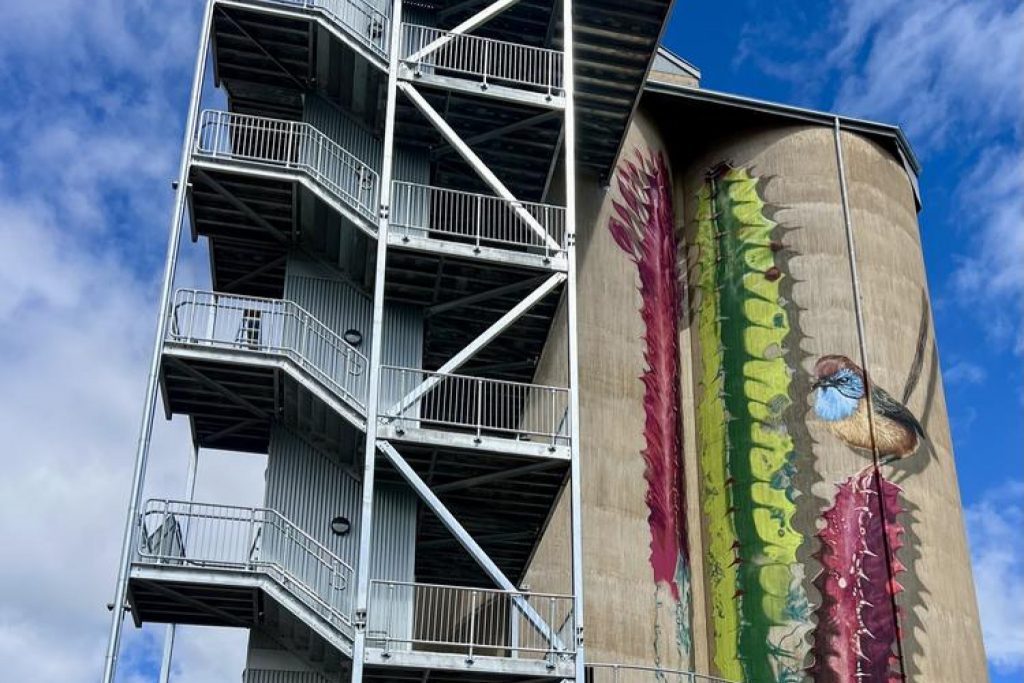
The result is a viewing experience that feels confident and considered. Visitors can move comfortably through the tower, pause at height and focus on the artwork and views that define the destination.
Completed in November 2025, the Rainbow Silo tower development has been described by Hindmarsh Shire Council as one of the most exciting destinations on the Silo Art Trail and stands as an example of how thoughtful access design can support longevity in regional tourism projects.